Our beliefs and behaviour are largely an aggregation of what we have experienced and observed throughout our lives. We start with a blank slate. The initial pages of our book are written by the people who made up our family or were our guardians in our toddler years. Then it moves to our peer groups—children in school or in our neighbourhood with whom we hang around. This continues through the teens. The real test comes when we are out in the world and have to work with total strangers. All the years of absorbing the vibes around us now come into play.
Dealing with strangers is part of real life. The more I dealt with them, the more I realised I had to be on my guard at all times. In my travels across the country, I ran into strangers at bus stands and airports. I was working with the government in a department that required such travelling—visiting remote corners of the country, living in temporary structures. Interacting with strangers was an unavoidable part of these journeys.
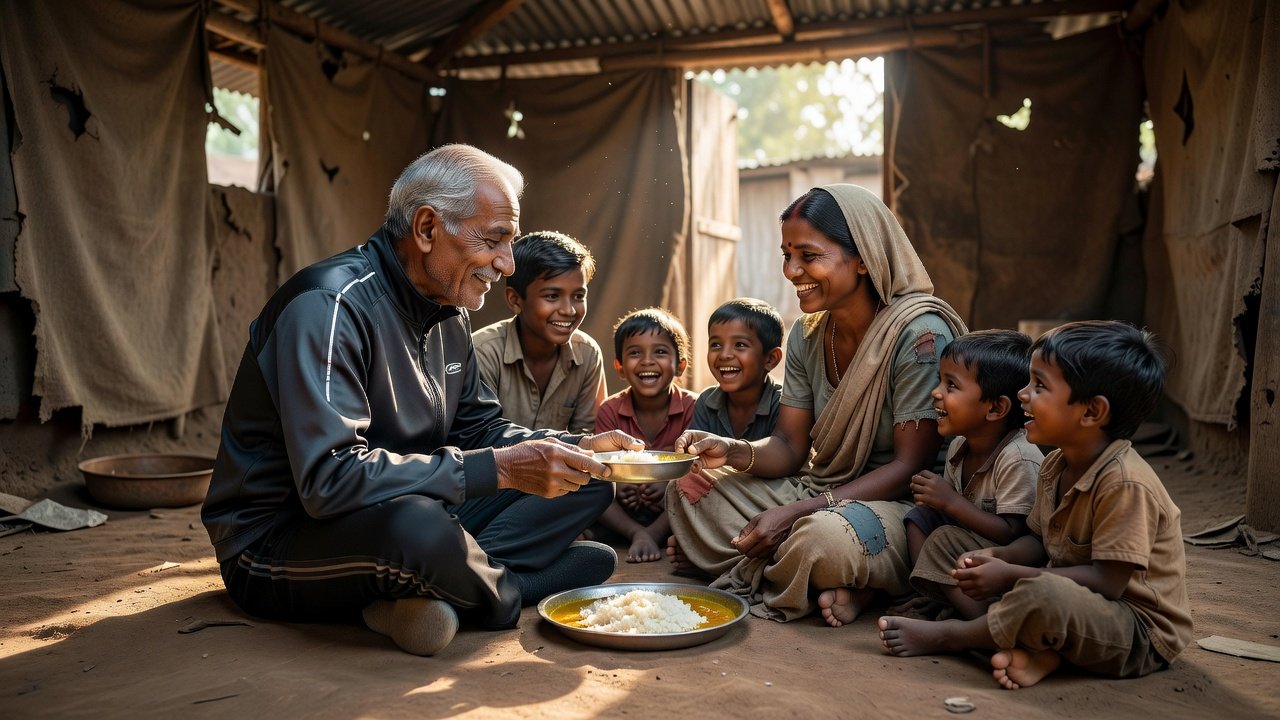
Once I was visiting a neighbouring village. My office assistant, a local villager, and I walked the five kilometres to this village. On the way he decided to visit a relative. As we entered the hut, the family of six were just starting lunch. These were very poor people—torn clothes, bamboo walls, a tin sheet for the roof. No chairs, no tables. They were squatting on the floor. That was when I made my entrance in designer sports shoes and trendy sportswear. They did not know a word of Hindi, and I had no understanding of their language. The lady of the house immediately put out a plate for me and my assistant.
I refused, but my assistant told me it would be disrespectful not to eat. So I had to go along with it. The lady put a huge mound of rice on my plate and added some watery soup. No spices—only salt and a little turmeric. I ate in silence. Somehow I managed to finish the plate when she filled it again with rice. I was stunned. Some more watery soup on top. I protested, but I had no option but to eat that as well. The four children, all below ten, watched me with wide eyes and giggled as I ate. My assistant said that to stop them from adding more food I had to cover my plate with my hand. That was apparently the polite way.
As we got up, I took some money from my pocket and was about to offer it to them when my assistant said it would be taken as an insult. They had fed me as a guest, and you do not take money from guests. I thanked them in Hindi and English. They all smiled, not understanding a word of what I said, and sent me off on my journey. As I walked away, I learnt a lesson in humanity. Those poor people, with almost nothing in their house, did not hesitate a second before sharing a major portion of their food with a stranger. In all the six decades of my life I have never seen such hospitality in any of the homes of the people I have visited.
It may be because of such people—hidden among the billions who inhabit our planet—that humanity still survives and gives us hope for the future.