
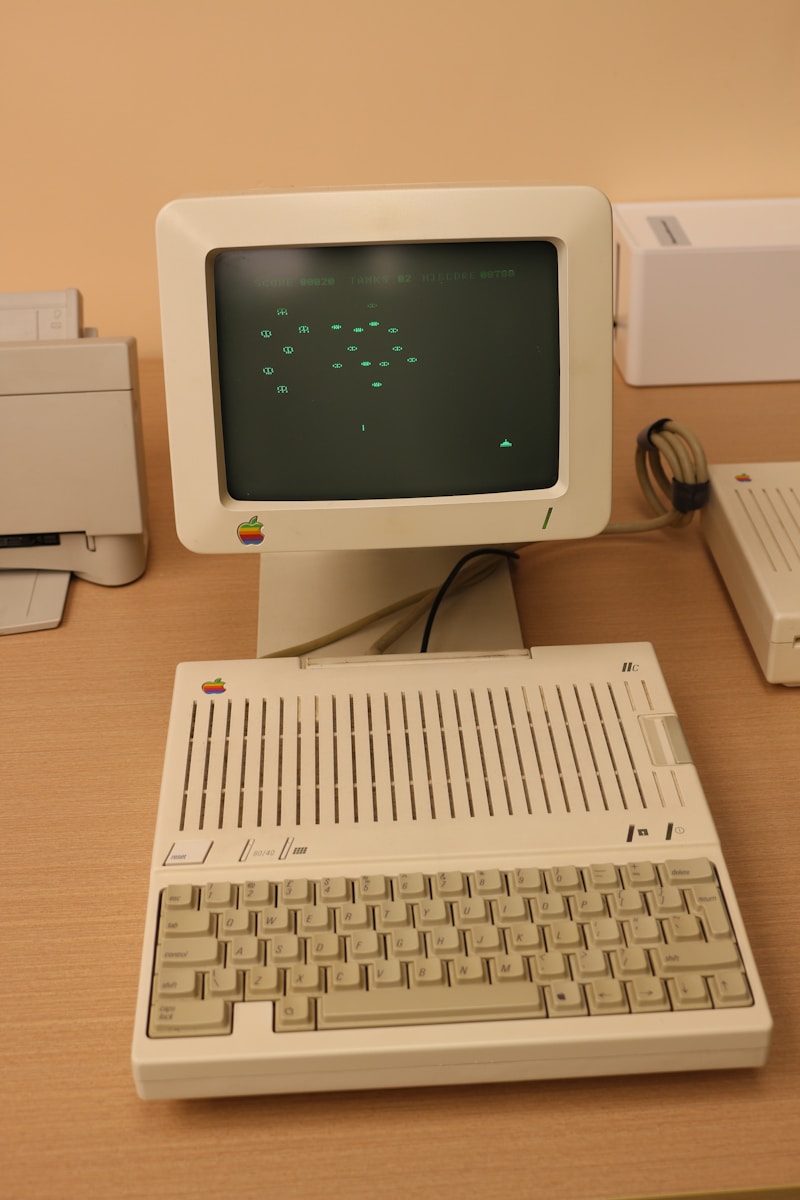
Desktop computers have profoundly evolved over the decades, shifting from large, room-filling machines to sleek, powerful devices. This article delves into their history, major technological advancements, and how these changes have shaped modern computing, highlighting the journey from early models to today’s innovative designs.
Historical Development and Key Milestones
In tracing the **historical development of desktop computers**, it is essential to recognize the foundational experiments and prototypes that set the stage for the personal computing revolution. During the 1970s, computing technology was predominantly confined to large, expensive mainframes and minicomputers used by corporations and institutions. However, innovations were gradually emerging, beginning with early programmable machines that hinted at the possibilities of personal, accessible computing. The Datapoint 2200, introduced in 1970, is often considered a pioneer. This machine was a programmable terminal with a built-in keyboard, capable of executing simple programs via a built-in language. Though not a personal computer in the modern sense, it demonstrated how computing could be embedded into a compact, user-friendly machine. Similarly, Hewlett-Packard’s HP 9800 Series, launched in 1970, offered a programmable calculator/desktop computer hybrid, blending calculator-like size with programming capabilities and inspiring future miniaturization efforts.
The IBM 5100, released in 1975, marks a significant milestone as one of the first portable, all-in-one desktop computers. It housed a microprocessor and was capable of running various programs, including the APL and BASIC languages, which made it versatile for business and scientific use. Its compact design and integrated display ports allowed it to be transported more easily than the massive mainframes of the time, laying the groundwork for the concept of personal computers.
The breakthrough came in 1977 with the launch of what are recognized as the first wave of truly personal computers. The Apple II, developed by Steve Wozniak and Steve Jobs, was among the earliest mass-produced personal computers, featuring a color display, a keyboard, and expansion slots for peripherals. Its open architecture encouraged third-party development, which rapidly expanded its functionality and appeal. The TRS-80, introduced by Tandy Corporation (Radio Shack), and the Commodore PET followed suit, each offering affordable, ready-to-use computing solutions targeted at hobbyists, educators, and small businesses. These early personal computers were pivotal because they transitioned computing from large, centralized systems to accessible, desktop-sized devices with emphasis on user-friendliness and expandability.
The 1980s saw an explosion of innovation and competition, fundamentally transforming desktop computing. IBM’s IBM PC 5150, launched in 1981, dramatically shifted the landscape. Its open architecture and use of off-the-shelf components set a standard that industry would adopt widely. The IBM PC’s inclusion of MS-DOS as the operating system became a de facto industry standard and a catalyst for software development. Hardware advancements during this period included the transition from simple 8-bit processors to more powerful 16-bit architectures such as the Intel 80286 and 80386, enabling more complex applications and multitasking capabilities.
Throughout the 1980s and early 1990s, desktop computers grew increasingly sophisticated, evolving in hardware and form factor. Desktops transitioned from bulky, monolithic boxes to more refined, space-efficient designs. Advances in semiconductor technology, particularly the shift from P5 to P6 processors by Intel, facilitated higher clock speeds, increased RAM capacity, and better graphics capabilities. The introduction of graphical user interfaces (GUIs) with systems like the Apple Macintosh in 1984 and Microsoft Windows in the late 1980s revolutionized user interaction, making computers more accessible to a broader audience. These developments drove innovation across hardware components such as hard drives, which moved from kilobytes to megabytes, and input devices, including the mouse, which became standard peripherals.
At the same time, form factor shifts occurred alongside hardware improvements. Desktops became more compact and modular, accommodating the increasing demand for performance and expandability but also laying the groundwork for more aesthetic, space-efficient designs. AT and ATX form factors emerged, standardizing components and making upgrades easier. The introduction of dedicated graphics cards, sound cards, and additional RAM slots fueled the era’s powerful, multimedia-capable machines. This hardware evolution enabled desktop computers to handle increasingly complex tasks, from desktop publishing to early 3D modeling, fueling the extension of their roles from mere productivity tools to multimedia centers.
By the 1990s, desktop computers had firmly established themselves as essential tools in homes and workplaces, driven by the democratization of technology and prices that kept dropping. The rise of the Internet also began to influence hardware design, with integrated modems and network interface cards becoming common. The transition from bulky, expensive machines to sleek, user-friendly desktops with high-performance components marked an era of rapid technological progress that would continue into the new millennium. Overall, this period of rapid hardware innovation, combined with the evolution of software and user interface design, fundamentally redefined what desktop computers could do and who could use them, thus shaping the computing landscape for decades to come.
Conclusions
In summary, desktop computers have experienced remarkable transformation marked by miniaturization, increased power, and versatile designs. Their evolution reflects broader technological progress and changing user needs, cementing their role in everyday life. Understanding this history offers insight into future innovations and ongoing advancements in personal computing.

