How AI Will Reshape the World in 50 Years
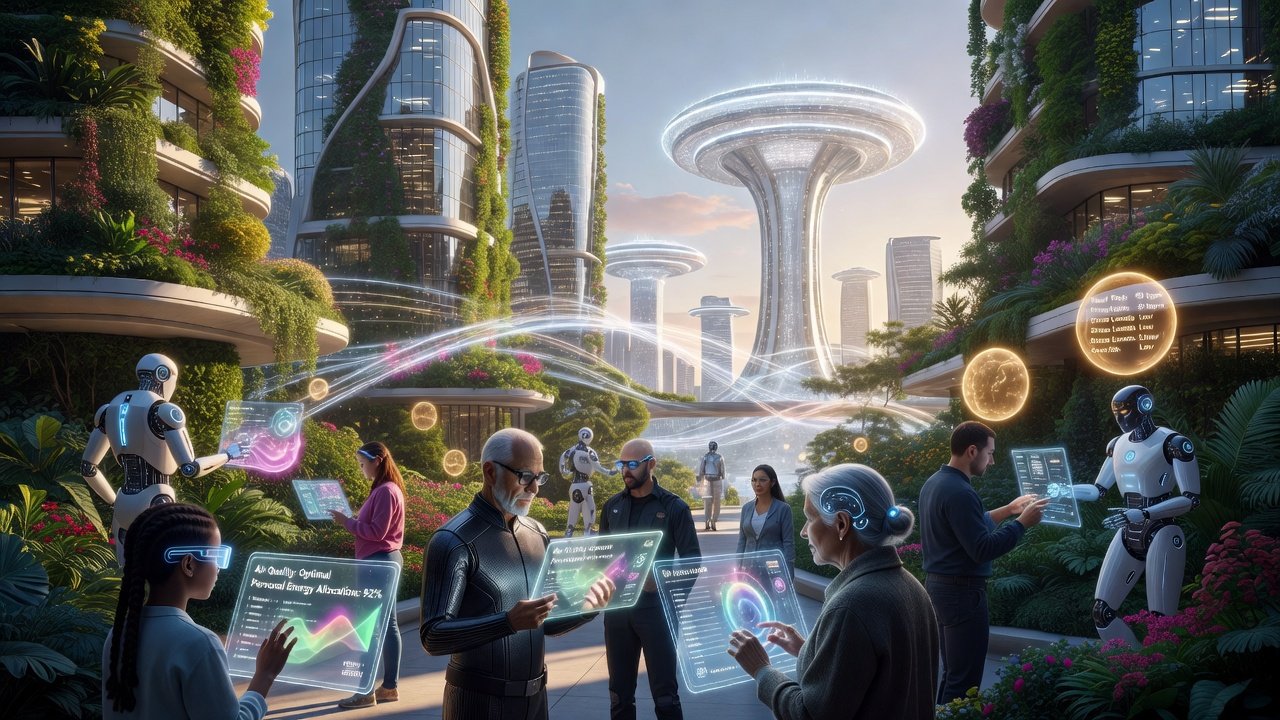
How AI Will Reshape the World in 50 Years

By 2074, artificial intelligence will have evolved far beyond today’s chatbots and recommendation engines. It will permeate every layer of human existence, acting as an invisible architect of society. From personalized medicine to climate restoration, AI promises both unprecedented abundance and complex ethical dilemmas. This article explores the most probable transformations, grounded in current trajectories of machine learning, robotics, and data science.

Healthcare: From Treatment to Prevention and Longevity

AI will shift medicine from reactive care to continuous, predictive wellness. Wearable and implantable sensors will feed real-time biometric data into personal AI health agents. These systems will detect diseases like cancer or Alzheimer’s years before symptoms appear, enabling interventions that extend healthy lifespans to 100+ years for many.

  • Personalized drug design — AI will create bespoke pharmaceuticals in hours rather than years.
  • Robotic surgeons — Autonomous systems will perform complex procedures with zero human fatigue.
  • Mental health companions — Empathetic AI therapists will provide 24/7 support, reducing stigma and access barriers.

Global health inequality may narrow as low-cost AI diagnostics reach remote regions, though data privacy and access equity will remain critical challenges.

Work, Economy, and the Post-Scarcity Question

Automation will eliminate most routine cognitive and physical jobs. Transportation, manufacturing, legal research, and even creative coding will be largely handled by specialized AI agents. In response, societies will likely adopt variations of universal basic income funded by AI-driven productivity gains.

New professions will emerge around AI oversight, synthetic biology design, and human-AI collaboration. The concept of “work” may shift toward meaning-making activities—art, exploration, community building—rather than survival. However, wealth concentration among AI owners could exacerbate inequality unless robust redistribution mechanisms are implemented.

Climate, Energy, and Environmental Restoration

AI will become the primary tool for managing planetary systems. Advanced climate models will run in real time, optimizing carbon capture, reforestation, and renewable energy grids with precision impossible for humans.

  • Autonomous drones and robots will restore ecosystems at scale.
  • AI-managed fusion or next-generation nuclear plants will deliver near-limitless clean energy.
  • Precision agriculture powered by AI will feed 10 billion people while using 70% less water and land.

By 2074, AI-orchestrated geoengineering could stabilize global temperatures, though governance of such powerful interventions will require new international frameworks.

Education and Human Augmentation

Learning will become lifelong and hyper-personalized. AI tutors will adapt to each individual’s cognitive style, emotional state, and goals, compressing years of traditional education into months. Brain-computer interfaces may allow direct knowledge transfer, raising questions about authenticity and human identity.

Creativity will flourish as AI handles technical execution, freeing humans to focus on vision and emotion. The distinction between “human-made” and “AI-assisted” art will blur, prompting new cultural norms around authorship.

Ethics, Governance, and Existential Risk

The most profound changes will involve power and control. Superintelligent systems may negotiate treaties, draft legislation, and manage infrastructure with minimal human input. This raises urgent questions:

  1. Who aligns AI values with humanity’s diverse moral frameworks?
  2. How do we prevent authoritarian regimes from weaponizing autonomous systems?
  3. What rights, if any, should advanced AI entities possess?

Global AI governance treaties, similar to nuclear non-proliferation agreements, will likely emerge. Transparent, auditable AI architectures and international oversight bodies could mitigate catastrophic risks while preserving innovation.

Daily Life and Human Identity

Cities will become responsive organisms. Traffic, waste, energy, and public safety will be managed by interconnected AI networks that anticipate needs before they arise. Virtual and augmented realities will be indistinguishable from physical environments, enabling seamless work, travel, and social connection from anywhere.

Human identity itself will evolve. Many people will maintain continuous relationships with long-lived AI companions. The boundary between biological and digital minds may soften through neural interfaces, prompting philosophical debates about consciousness and mortality.

Conclusion: A Fork in the Road

In 50 years, AI will not merely assist humanity—it will co-create the future. The outcome depends less on technological capability and more on the wisdom with which we design incentives, institutions, and ethical guardrails today. Optimistic scenarios point to abundance, extended health, and creative flourishing. Pessimistic ones warn of surveillance states and loss of human agency.

The next five decades offer a narrow window to shape these trajectories. By prioritizing alignment, equity, and transparency, society can steer AI toward becoming the greatest force for human flourishing in history rather than its greatest threat.

Climate Change Debates: Reality, Hoaxes, and Conspiracy Theories

traffic light sign underwater

The debate surrounding climate change encompasses scientific facts, conspiracy theories, and claims of hoaxes. This article explores the scientific basis of climate change, examines its portrayal as a hoax, and addresses the impact of conspiracy theories. Understanding these facets is crucial for forming an informed opinion on one of today’s most pressing issues.

The Scientific Foundation of Climate Change

The scientific foundation of climate change is built upon a vast and robust body of evidence that clearly documents the profound impact of greenhouse gases on Earth’s climate system. Central to this understanding is the role of greenhouse gases—primarily carbon dioxide (CO2), methane (CH4), nitrous oxide (N2O), and fluorinated gases—in trapping heat within the Earth’s atmosphere. This natural phenomenon, known as the greenhouse effect, is essential for maintaining temperatures conducive to life. However, human activities since the Industrial Revolution have significantly amplified this effect, leading to unprecedented global warming.

Since the late 18th century, marked by the advent of the Industrial Revolution, atmospheric concentrations of CO2 have risen sharply—from about 280 parts per million (ppm) in pre-industrial times to over 420 ppm today. This increase is primarily driven by the combustion of fossil fuels such as coal, oil, and natural gas, which releases vast quantities of CO2 into the atmosphere. Deforestation further compounds this issue, as trees, which serve as natural carbon sinks, are removed at alarming rates. Industrial processes, cement production, and agriculture also contribute substantial emissions of greenhouse gases, especially methane and nitrous oxide, which are far more potent in trapping heat per molecule than CO2 over short timescales.

The direct link between these human-induced emissions and rising global temperatures has been extensively documented through multiple lines of scientific evidence. Temperature records from global surface stations, satellite data, and ocean measurements consistently show a clear warming trend. According to the Intergovernmental Panel on Climate Change (IPCC), the Earth’s surface temperature has increased by approximately 1.1°C since the late 19th century, with much of this warming occurring over the last fifty years. Notably, the five warmest years on record have all occurred since 2015, emphasizing the acceleration of climate change.

In addition to temperature records, scientists analyze proxies such as ice cores, sediment layers, and tree rings to reconstruct past climate conditions. These proxies reveal that current levels of atmospheric CO2 are unprecedented in at least the past 800,000 years, directly correlating with shifts in global temperatures. Ice core data from Antarctica show that periods of high greenhouse gas concentrations align with warmer interglacial periods, but the current spike in CO2 levels far exceeds natural fluctuations observed before industrialization.

Climate models, which are sophisticated simulations of Earth’s climate system, further cement this understanding. These models incorporate the known physical laws governing atmospheric, oceanic, and land surface processes, allowing scientists to test various scenarios. When these models account for natural influences—solar variability, volcanic activity—they still fail to reproduce the recent warming without including human-produced greenhouse gases. Conversely, models projecting only natural factors show little to no warming, thereby reinforcing the critical role of anthropogenic emissions in recent climate change.

The scientific consensus is reinforced by comprehensive assessments from major scientific organizations worldwide. The Intergovernmental Panel on Climate Change (IPCC) in its Sixth Assessment Report states with high confidence that human influence is the dominant cause of observed global warming since the mid-20th century. Similarly, the National Academies of Sciences and Engineering in the United States, the Royal Society in the United Kingdom, and their counterparts across the globe have explicitly endorsed the conclusion that human activities are solely responsible for recent climate trends.

Fundamentally, the scientific basis of climate change hinges on understanding how increased greenhouse gas concentrations alter the Earth’s energy balance. This is measured by the radiative forcing concept, which quantifies the change in energy fluxes caused by factors such as greenhouse gases, aerosols, and land-use changes. Elevated levels of greenhouse gases have an overall positive radiative forcing—meaning they trap more heat—leading to a warming of the climate system. Far from speculative, this physical process has been verified through satellite observations, laboratory experiments, and real-world climate data.

Understanding the scientific evidence is crucial, especially in the face of misinformation, hoaxes, and conspiracy theories emphasizing doubt or denial. While natural variability and other factors always influence climate, the overwhelming body of scientific research confirms that human activity is the primary driver of recent changes. Dismissing this evidence not only hampers efforts to mitigate climate impacts but also endangers future generations. Recognizing the solid scientific foundation behind climate change empowers policymakers, communities, and individuals to make informed decisions aimed at reducing emissions and adapting to the changes already underway.

Conclusions

In conclusion, robust scientific consensus confirms human-induced climate change as a real, pressing threat. While misinformation and conspiracy theories persist, evidence and experts agree on the need for urgent action. Staying informed and critical of false narratives is essential to support effective climate solutions and global well-being.

My AI experiments

Of late, I have been experimenting a lot with AI tools. These experiments cement my views on the benefits of using these development assistants to enhance productivity.

Full transparency: I was an average developer at best. I was a late entrant into computers. The first couple of years of my career were spent working for the government in far-flung posts, locations that lacked regular electricity or running water. A return to ‘civilian life’ turned me towards computers, which have been a part of my life for the last three decades. Now, to the main point.

A couple of weeks back, I created three game apps using AI tools and posted them on my website. To explain further, I have not written a line of code in these apps. That might explain their success, but that’s another story.
Let me clarify that I can understand code and, to some extent, what is written in error logs and can also test apps.

Let me now explain how ‘I’ built those apps. I started by defining what I wanted in a few sentences. Next, I copied and pasted this draft into Grok and asked it to write a professional requirements document. I handed this document to Figma Make.

Within seconds, Figma made a prototype with CSS, TSX, and TS files. The end result was a working sample app I could test immediately. I gave a few more instructions and minor tweaks, which it followed like an intelligent developer, and my basic app was ready.

By the way, Figma does all this for free. Once I was satisfied with the end result, I downloaded the files and put them in a folder on my laptop. I opened this folder in Cursor AI and asked it to transform it into a WordPress plugin zip. The plugins are now installed and running on my blog.

My point is this: if a man in his late fifties with a basic understanding of code can do this, imagine what smart, energetic, and intelligent YOU can do.
If you have ideas or see an opportunity to turn your imagination into workable software, now is the time. No need to spend years learning and memorizing all the nuances of a programming language. With basics, you can achieve a lot. Think of yourself as a business person who hires a smart developer to write some code.

The catch is, These apps are not exactly ‘no code’ or even ‘low code’. It is a bit more than low code and involves a lot of manual testing on your part. Also, do not trust the AI tool blindly, as these systems are still in their infancy and learning to walk. You have to hold its hand and gently guide it. Remember the movie Superman when the toddler crash-lands at Kent’s farm. It could lift a car with its hands, but it was still a baby. That is AI for you as of today.

A day may come when it won’t fully obey your commands and tells you to do your coding yourself, but till that day comes, enjoy the show. Have some fun building the app of your dreams and get it done fast.

Embracing Active Living lifestyle for a Long and Healthy Life in Old Age

people exercising

As individuals age, maintaining an active lifestyle becomes essential for preserving health, mobility, and overall well-being. Regular exercise effectively counters the negative impacts of sedentary living, enhances quality of life, and promotes longevity. This article examines the scientifically supported benefits of exercise in old age and provides practical guidance for incorporating physical activity into daily routines for seniors.

Why Exercise Matters in Old Age

Aging naturally brings physiological changes, including reduced cardiovascular efficiency, loss of muscle mass, decreased bone density, and diminished coordination. Regular physical activity serves as a powerful countermeasure, mitigating these effects and supporting a vibrant, independent life. For older adults, exercise is not merely optional but a cornerstone of healthy aging.

Cardiovascular Health Benefits of Exercise for Seniors

One of the primary advantages of consistent exercise lies in its positive impact on heart health. Aerobic activities such as brisk walking, swimming, or cycling strengthen cardiac function, help regulate blood pressure, and lower harmful LDL cholesterol levels.

Scientific evidence reinforces these outcomes. A meta-analysis published in the Journal of the American College of Cardiology found that older adults engaging in moderate-intensity aerobic exercise experienced a 20–25% reduction in cardiovascular disease risk. These improvements decrease the likelihood of heart attacks, strokes, and related complications, thereby extending both lifespan and healthspan.

Building Muscle Strength and Bone Density

Sarcopenia, the progressive loss of muscle mass and strength, contributes significantly to frailty and reduced mobility in seniors. Resistance training using weights, resistance bands, or bodyweight exercises can effectively slow or reverse this process.

Studies demonstrate that adults over 70 can achieve notable gains in muscle mass and strength through structured programs. Enhanced muscular support stabilizes joints, alleviates pain, and improves functional capacity, fostering greater independence and reducing the risk of disability.

Improving Balance, Coordination, and Fall Prevention

Falls represent a leading cause of injury among older adults due to age-related declines in proprioception and neuromuscular control. Balance-focused exercises, including tai chi and yoga, significantly enhance postural stability and reaction times.

Research published in the British Medical Journal indicates that balance-enhancing activities can reduce fall risk by up to 40%. By preserving coordination and confidence in movement, these exercises help seniors maintain autonomy in performing everyday tasks.

Mental Health and Cognitive Benefits of Physical Activity

Exercise profoundly influences mental well-being in addition to its physical advantages. Older adults face increased vulnerability to depression, anxiety, and cognitive decline. Regular activity stimulates the release of endorphins and serotonin, elevating mood and reducing stress.

Neuroimaging research shows that exercise promotes neurogenesis in the hippocampus, the brain region associated with memory and learning. Moderate activity — such as 150 minutes of brisk walking per week — has been linked to improved cognitive function and a reduction in dementia and Alzheimer’s disease risk by up to 30%, according to studies in the Archives of Internal Medicine.

Delaying Biological Aging and Extending Lifespan

Exercise activates cellular repair mechanisms, improves mitochondrial function, and supports hormonal balance, collectively slowing biological aging. It also positively influences telomere length, a key biomarker of cellular aging.

According to the World Health Organization, physically active seniors typically enjoy 5 to 10 additional years of life with higher health-adjusted life expectancy compared to sedentary individuals. This underscores exercise as a practical strategy for healthy longevity.

Practical Recommendations for Seniors Starting an Exercise Routine

To maximize benefits while ensuring safety, older adults should follow evidence-based guidelines:

  • Aerobic Activity: Aim for at least 150 minutes of moderate-intensity exercise per week, spread across several days.
  • Strength Training: Incorporate muscle-strengthening exercises on two or more days weekly.
  • Balance and Flexibility: Include activities like tai chi, yoga, or simple balance drills.
  • Personalization: Select accessible, enjoyable activities suited to individual fitness levels. Consult healthcare providers before beginning, especially when managing chronic conditions.
  • Social Engagement: Join group classes or walking groups to enhance motivation and adherence.

Gradual progression minimizes injury risk, and the health benefits substantially outweigh potential concerns when activity is properly prescribed.

Conclusion: Embrace Active Aging

Regular exercise stands as a vital pillar of healthy aging. It strengthens the cardiovascular system, preserves muscle and bone health, improves balance, supports mental clarity, and promotes independent living well into later years.

By integrating sustainable physical activity into daily life, seniors can reduce health risks, boost vitality, and enjoy a more fulfilling existence. Adopting an active lifestyle at any age represents a powerful, accessible investment in long-term well-being.