Understanding Noise Pollution and Its Impact on Society

woman in blue and black striped long sleeve shirt shutting her ears

Noise pollution is a pervasive environmental issue impacting various aspects of life, from health to social interactions. This article explores how noise levels influence different groups such as children and the elderly, the role of religion in acoustic environments, and the scientific measurement of decibels. Understanding these connections helps in creating harmonious living spaces.

The Impact of Noise Pollution on Society

Noise pollution has become an increasingly pervasive issue within modern society, arising primarily from urban development, transportation systems, and industrial activities. These sources contribute significantly to the elevated sound levels in many areas, often surpassing the thresholds deemed acceptable for human health and well-being. Urban sprawl and increased infrastructural projects tend to encroach upon previously quiet zones, leading to a relentless flood of sound that permeates living and working environments. Traffic noise from vehicles, trains, airports, and construction sites constitute some of the most prevalent contributors, with industrial zones adding constant background noise through machinery and manufacturing processes. The cumulative effect of these sources creates a constant “soundscape” that can be disruptive and harmful, especially when levels are sustained over prolonged periods.

Measuring noise pollution involves quantifying sound intensity using the decibel (dB) scale, which is logarithmic in nature. This means that a small increase in decibels corresponds to a substantial rise in sound energy. For example, normal conversation occurs around 60 dB, whereas city traffic noise can range from 70 to 85 dB. Prolonged exposure to noise levels above 70 dB has been linked with adverse health effects, emphasizing the importance of regulation and urban planning. Regulatory bodies, such as the World Health Organization (WHO), recommend that environmental noise levels should ideally not exceed 55 dB during the day and 40 dB at night to prevent health disturbances. When noise exceeds these levels, the risk of issues like hearing impairment, cardiovascular disease, sleep disturbances, and mental health problems increases.

Different populations are affected uniquely by noise pollution, depending on their age, lifestyle, and health status. Children, for example, are particularly vulnerable to high noise levels. Exposure to excessive sound during childhood can hinder speech development, impair concentration, and increase the risk of behavioral problems. Their developing auditory systems are more sensitive, and chronic noise exposure might even influence cognitive tasks like memory and learning processes. Therefore, ensuring quiet environments in schools and residential areas is crucial for fostering healthy childhood development.

Older adults are similarly at heightened risk from noise pollution due to age-related sensory decline and existing health conditions. Elevated noise levels can exacerbate issues such as hypertension, hearing loss, and sleep disorders among the elderly. Furthermore, loud environments can lead to increased stress levels, which aggravate cardiovascular conditions prevalent in older populations. Chronic exposure to noise can also impede social interactions by causing discomfort or stress, thereby isolating older individuals and affecting their mental health. Urban planning that incorporates soundproofing and designated quiet zones can significantly mitigate these risks, enabling aging populations to maintain their well-being.

Religion and cultural practices can also be influenced by sound levels. In many societies, religious ceremonies and rituals involve loud chanting, music, and the use of percussion instruments, which, when conducted respectfully and within regulated sound limits, contribute to cultural identity and community cohesion. However, excessive amplification or poorly managed sound systems can lead to disturbances that affect nearby residents or vulnerable groups like children and the elderly. Balancing the spiritual significance of sound in religious contexts with community health considerations is essential for fostering social harmony.

The impact of sound levels extends beyond individual health, affecting societal interactions, economic productivity, and overall quality of life. For instance, high noise environments can increase stress and irritability, reducing social cohesion by fostering conflict or resentment among residents. Noise-induced health issues, such as hypertension and sleep disturbances, lead to increased healthcare costs and decreased work efficiency, thereby impacting the broader economy. Consequently, cities and policymakers must adopt strategies to regulate noise, including zoning laws, restrictions on industrial and construction activities during certain hours, and the integration of sound barriers in transportation corridors.

Scientific data underscores the importance of implementing comprehensive urban planning strategies aimed at mitigating noise pollution. Incorporating green spaces, buffer zones, and acoustic insulation measures can effectively reduce sound transmission. Public awareness campaigns about the health risks associated with noise pollution are vital for encouraging community participation and compliance with regulations. Ultimately, understanding the sources and effects of noise pollution enables policymakers and urban planners to develop sustainable solutions that protect vulnerable populations like children and the elderly, ensuring a healthier, more harmonious society.

Conclusions

In summary, noise pollution significantly affects vulnerable populations like children and seniors, shaping their health and well-being. Religious practices and societal norms often interact with sound levels, emphasizing the need for mindful urban planning. Recognizing the role of decibels in measuring noise helps in developing effective regulations for a healthier environment.
The Evolution of Desktop Computers Through the Years

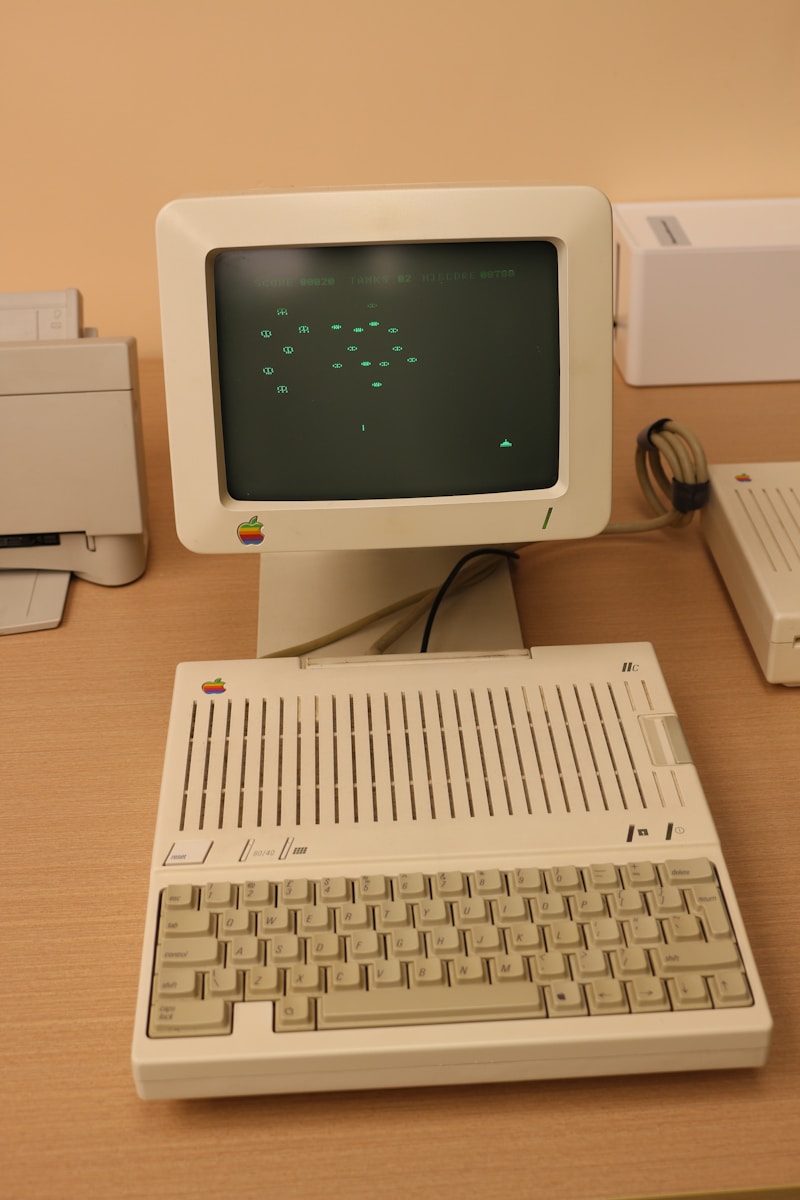
An old computer sitting on top of a wooden desk

Desktop computers have profoundly evolved over the decades, shifting from large, room-filling machines to sleek, powerful devices. This article delves into their history, major technological advancements, and how these changes have shaped modern computing, highlighting the journey from early models to today’s innovative designs.

Historical Development and Key Milestones

In tracing the **historical development of desktop computers**, it is essential to recognize the foundational experiments and prototypes that set the stage for the personal computing revolution. During the 1970s, computing technology was predominantly confined to large, expensive mainframes and minicomputers used by corporations and institutions. However, innovations were gradually emerging, beginning with early programmable machines that hinted at the possibilities of personal, accessible computing. The Datapoint 2200, introduced in 1970, is often considered a pioneer. This machine was a programmable terminal with a built-in keyboard, capable of executing simple programs via a built-in language. Though not a personal computer in the modern sense, it demonstrated how computing could be embedded into a compact, user-friendly machine. Similarly, Hewlett-Packard’s HP 9800 Series, launched in 1970, offered a programmable calculator/desktop computer hybrid, blending calculator-like size with programming capabilities and inspiring future miniaturization efforts.

The IBM 5100, released in 1975, marks a significant milestone as one of the first portable, all-in-one desktop computers. It housed a microprocessor and was capable of running various programs, including the APL and BASIC languages, which made it versatile for business and scientific use. Its compact design and integrated display ports allowed it to be transported more easily than the massive mainframes of the time, laying the groundwork for the concept of personal computers.

The breakthrough came in 1977 with the launch of what are recognized as the first wave of truly personal computers. The Apple II, developed by Steve Wozniak and Steve Jobs, was among the earliest mass-produced personal computers, featuring a color display, a keyboard, and expansion slots for peripherals. Its open architecture encouraged third-party development, which rapidly expanded its functionality and appeal. The TRS-80, introduced by Tandy Corporation (Radio Shack), and the Commodore PET followed suit, each offering affordable, ready-to-use computing solutions targeted at hobbyists, educators, and small businesses. These early personal computers were pivotal because they transitioned computing from large, centralized systems to accessible, desktop-sized devices with emphasis on user-friendliness and expandability.

The 1980s saw an explosion of innovation and competition, fundamentally transforming desktop computing. IBM’s IBM PC 5150, launched in 1981, dramatically shifted the landscape. Its open architecture and use of off-the-shelf components set a standard that industry would adopt widely. The IBM PC’s inclusion of MS-DOS as the operating system became a de facto industry standard and a catalyst for software development. Hardware advancements during this period included the transition from simple 8-bit processors to more powerful 16-bit architectures such as the Intel 80286 and 80386, enabling more complex applications and multitasking capabilities.

Throughout the 1980s and early 1990s, desktop computers grew increasingly sophisticated, evolving in hardware and form factor. Desktops transitioned from bulky, monolithic boxes to more refined, space-efficient designs. Advances in semiconductor technology, particularly the shift from P5 to P6 processors by Intel, facilitated higher clock speeds, increased RAM capacity, and better graphics capabilities. The introduction of graphical user interfaces (GUIs) with systems like the Apple Macintosh in 1984 and Microsoft Windows in the late 1980s revolutionized user interaction, making computers more accessible to a broader audience. These developments drove innovation across hardware components such as hard drives, which moved from kilobytes to megabytes, and input devices, including the mouse, which became standard peripherals.

At the same time, form factor shifts occurred alongside hardware improvements. Desktops became more compact and modular, accommodating the increasing demand for performance and expandability but also laying the groundwork for more aesthetic, space-efficient designs. AT and ATX form factors emerged, standardizing components and making upgrades easier. The introduction of dedicated graphics cards, sound cards, and additional RAM slots fueled the era’s powerful, multimedia-capable machines. This hardware evolution enabled desktop computers to handle increasingly complex tasks, from desktop publishing to early 3D modeling, fueling the extension of their roles from mere productivity tools to multimedia centers.

By the 1990s, desktop computers had firmly established themselves as essential tools in homes and workplaces, driven by the democratization of technology and prices that kept dropping. The rise of the Internet also began to influence hardware design, with integrated modems and network interface cards becoming common. The transition from bulky, expensive machines to sleek, user-friendly desktops with high-performance components marked an era of rapid technological progress that would continue into the new millennium. Overall, this period of rapid hardware innovation, combined with the evolution of software and user interface design, fundamentally redefined what desktop computers could do and who could use them, thus shaping the computing landscape for decades to come.

Conclusions

In summary, desktop computers have experienced remarkable transformation marked by miniaturization, increased power, and versatile designs. Their evolution reflects broader technological progress and changing user needs, cementing their role in everyday life. Understanding this history offers insight into future innovations and ongoing advancements in personal computing.

Exploring Linux and Its Ecosystem: From Linus Torvalds to Enterprise Solutions

ubuntu desktop command prompt screen

This article explores the evolution of Linux, its creator Linus Torvalds, and the fundamental operating systems like Unix. It also examines prominent Linux distributions such as Ubuntu and Red Hat, highlighting their significance in both personal computing and enterprise environments, revealing the technological revolution driven by open source software.

The Origins and Evolution of Linux

During the early 1990s, the landscape of computing was predominantly shaped by proprietary operating systems like MS-DOS and early versions of Windows, which were limited by their closed-source nature and restrictive licensing. In stark contrast, the concept of open-source software was gaining momentum among enthusiasts and developers seeking more flexible and collaborative approaches to software development. Central to this movement was Linus Torvalds, a Finnish computer science student who, in 1991, embarked on a project that would revolutionize the world of operating systems: the creation of the Linux kernel.

Linus Torvalds’ motivation stemmed from his dissatisfaction with the licensing restrictions and user experience of existing UNIX systems, which, while powerful, were often expensive and had a complex licensing model. Recognizing the potential for an open, Unix-like operating system that could run on personal computers, Torvalds released the initial version of the Linux kernel as free software, available under the GNU General Public License (GPL). This licensing choice was pivotal; it mandated that any derivative work also be open source, fostering a community-driven development process characterized by transparency, collaboration, and widespread sharing.

The Linux kernel itself is a crucial component of any Linux-based operating system. It provides the core functionalities necessary for hardware management, process control, memory handling, and security. Unlike monolithic operating systems like early UNIX variants, the Linux kernel is designed with modularity in mind, enabling developers to add or remove features dynamically. Over subsequent years, the kernel was continuously refined, optimized, and expanded through contributions from thousands of programmers worldwide, turning it into a robust, scalable, and highly adaptable piece of software.

Despite its origins as a hobbyist project, Linux quickly attracted a significant programmer community. Its open-source license meant that anyone could view, modify, and redistribute the source code, facilitating rapid innovation and bug fixing. One key aspect that propelled Linux’s growth was its relation to UNIX. Although Linux is not derived directly from UNIX source code, it is engineered to be UNIX-compatible, providing similar APIs and system interfaces. This compatibility made it a viable alternative for many institutions and developers seeking a UNIX-like environment without the associated costs and licensing restrictions.

The rapid proliferation of Linux was also driven by the emergence of various Linux distributions, which are complete operating systems built around the Linux kernel, bundled with a selection of software and a package management system. These distributions serve different user needs — from desktop users to enterprise environments, and from hobbyists to researchers. Among the earliest distributions was Slackware (developed by Patrick Volkerding), which emphasized simplicity and minimalism. Others, like Debian, introduced a greater emphasis on stability, free software ideals, and community governance. Over time, this landscape diversified even further with distributions such as Mandrake (later Mandriva), Fedora, CentOS, and Arch Linux.

In the realm of enterprise and server markets, two distributions, in particular, played pivotal roles: Red Hat Enterprise Linux (RHEL) and Ubuntu. Red Hat, founded in 1993, popularized the concept of commercially supported Linux distributions, providing stability, security, and professional support for enterprise deployment. Its commitment to open source, combined with an effective business model based on subscriptions, allowed organizations to adopt Linux with confidence, knowing they could rely on dedicated support and updates. The Red Hat Linux project eventually evolved into Red Hat Enterprise Linux, which became a cornerstone of Linux’s enterprise ecosystem, leading to widespread adoption in data centers, supercomputers, and cloud infrastructure.

Ubuntu, launched in 2004 by Canonical Ltd., took a different approach, focusing on user-friendliness and accessibility for desktop users, alongside robust support for servers and cloud environments. Built on Debian’s foundation, Ubuntu simplified installation, configuration, and maintenance, helping Linux reach mainstream consumers and developers. Its emphasis on a polished graphical interface, vast software repositories, and regular releases made it one of the most popular Linux distributions worldwide.

From its inception as a small project by Linus Torvalds, Linux evolved into a colossal phenomenon with profound technical and societal implications. Its open-source licensing under GPL facilitated an unprecedented level of collaboration and sharing, which in turn spurred innovation, reduced costs, and improved security through peer review. Linux’s UNIX compatibility meant it could seamlessly replace traditional UNIX systems in many domains, thanks to its adherence to POSIX standards and API compatibility.

Across hardware architectures, Linux demonstrated remarkable versatility. Initially developed for x86 personal computers, Linux expanded to encompass a broad range of hardware platforms, including ARM, PowerPC, SPARC, and MIPS. This hardware agnosticism made Linux the operating system of choice for embedded devices, smartphones, routers, and even supercomputers. For example, Linux’s dominance in supercomputing is exemplified by the fact that most of the world’s top 500 supercomputers run Linux, owing to its scalability, performance tuning options, and the ability to customize the kernel to meet specific performance and security requirements.

The technical backbone of Linux’s success lies partly in its proactive development model. The kernel’s source code is hosted on repositories like GitHub and maintained by Linus Torvalds himself, along with numerous subsystem maintainers and a global community contributing patches, features, and security updates. The development process is highly transparent, with weekly releases and extensive peer review, ensuring rapid bug fixes and continuous improvements. Its architecture supports both monolithic kernels and hybrid approaches, allowing for modular additions such as device drivers, filesystems, network protocols, and security modules like SELinux.

As Linux expanded into enterprise environments, major distributions donated their efforts to provide distributions tailored for stability, security, and scalability. Red Hat’s subscription model provided professional support for RHEL, which became a foundation for many critical infrastructure applications. Meanwhile, community-driven projects like Debian and Ubuntu fostered widespread adoption for cloud computing, desktops, and development environments.

This evolution from a modest kernel built by a Finnish student to a cornerstone of global computing infrastructure underscores Linux’s significance. Its technical design principles—openness, modularity, and adaptability—have not only allowed it to thrive across diverse device categories but also to influence computing paradigms rooted in collaboration and shared innovation. From powering the earliest Unix-like systems to spearheading modern cloud-native architectures, Linux’s journey reflects a remarkable synergy of technical ingenuity and community-driven development that continues to shape the future of technology worldwide.

Conclusions

Linux’s journey from a personal project by Linus Torvalds to a global cornerstone of computing showcases the power of open source development. Distributions like Ubuntu and Red Hat have broadened Linux’s reach, impacting everyday users and enterprise systems alike. Understanding this ecosystem is key to appreciating modern technological innovation.

The Evolution of Computing: From Charles Babbage to Modern Computers

turned off Macintosh monitor

Computers have revolutionized our world, transforming industries and daily life. This article explores the fascinating evolution of computers, highlighting key figures like Charles Babbage, Ada Lovelace, and Alan Turing, and tracing the technological advancements that shaped modern computing from its inception to today.

The Origin and Evolution of Computers

The journey of computing technology began long before the advent of electronic machines, tracing back to ancient civilizations that sought methods to simplify complex calculations. Early humans used tally sticks—rudimentary, elongated bones or wood pieces carved with notches—to keep track of counts, transactions, and inventories. These simple tools, though primitive, laid the groundwork for more sophisticated counting systems. As societies advanced, the need for more efficient calculation devices led to the development of devices like the abacus in ancient Mesopotamia, China, and Greece. The abacus, with its sliding beads and horizontal rods, allowed users to perform arithmetic operations more swiftly than mental calculations alone, marking one of the earliest human efforts to mechanize computation.

With the march of technological progress, ancient cultures experimented with analog calculation aids such as the Antikythera mechanism—an intricate gear-driven device from ancient Greece believed to predict astronomical events—and astrolabes used for navigation. While these devices did not directly record or store data, they exemplified attempts to mechanize complex calculations and predictions, foreshadowing later developments in computing machinery.

The true revolution in computation, however, emerged with the introduction of mechanical aids during the 17th and 18th centuries. Pioneers like Blaise Pascal developed the Pascaline in 1642, a mechanical calculator capable of performing addition and subtraction through a series of interlocking gears and wheels. Shortly thereafter, Gottfried Wilhelm Leibniz designed the Stepped Reckoner, which could handle multiplication and division, pushing the boundaries of mechanical computation. However, these devices remained limited in scope and practical use, often confined to military, accounting, and scientific calculations due to their complexity and fragility.

The 19th century marked a transformative era, driven by the profound need for automation in burgeoning industries and scientific research. Charles Babbage, often hailed as the “father of the computer,” epitomized this movement. In the 1830s, Babbage conceptualized and designed the Difference Engine, an automated mechanical calculator intended to compute polynomial equations and generate mathematical tables with high precision. Although he never completed the full device in his lifetime due to funding and technical challenges, the Difference Engine embodied the principles of automatic computation through a series of gears and levers.

Babbage’s vision extended further with the Analytical Engine, a more ambitious design conceptualized in the 1840s. This machine was revolutionary because it incorporated concepts fundamental to modern computers: a *programming language*, a *memory* (referred to as a store), and a *central processing unit*, which Babbage dubbed the “mill.” Ada Lovlace, a mathematician and writer, saw tremendous potential in Babbage’s ideas. She wrote extensive notes on the Analytical Engine, envisioning its ability to manipulate symbols and perform tasks beyond mere calculation. In her correspondence with Babbage, she articulated the concept of a machine that could execute sequences of instructions—an embryonic form of programming—and even proposed applications in composing music and understanding logic.

The development of **Ada Lovlace**’s insights cemented her legacy as one of the first computer programmers, earning her the title of the world’s first software developer. She foresaw that such machines could do far more than sum numbers; they could manipulate any data represented in symbolic form, laying the conceptual foundation for artificial intelligence and software engineering. Her prescient ideas anticipated future developments in machine language and programming paradigms that pervade modern computing.

The dawn of electronic digital computing arrived in the 20th century, catalyzed by pioneering work during World War II. Alan Turing, a mathematician and logician, played a pivotal role in this transformation. Turing’s conceptual work on the *Turing machine* in the 1930s formalized notions of algorithmic computation, providing a theoretical framework that underpins the entire field of computer science. During the war, Turing led efforts at Bletchley Park to develop the **Colossus** machine—considered one of the earliest programmable digital computers—used to decipher encrypted German messages. His design principles emphasized the importance of reprogrammability and data manipulation, which became cornerstones of modern computer architectures.

Turing’s influence extended beyond hardware; he proposed the famous **Turing Test**, a criterion to determine whether a machine could exhibit intelligent behavior indistinguishable from a human. This idea sparked decades of research into artificial intelligence, machine learning, and natural language processing. Turing’s work bridged theoretical foundations and practical applications, paving the way for the development of all subsequent digital computers.

Together, these pioneers—Babbage, Ada Lovlace, and Turing—formed the intellectual bedrock upon which the modern computer was built. Babbage’s mechanical concepts foreshadowed the idea of programmable computation, Lovlace expanded that vision into the realm of software and algorithms, and Turing established the theoretical and practical frameworks that enabled programmable digital machines to flourish.

Transitioning from these foundational ideas to the era of electronic computers involved significant breakthroughs, primarily the invention of the transistor in 1947 by John Bardeen, Walter Brattain, and William Shockley at Bell Labs. The transistor replaced the bulky vacuum tubes used in earlier computers, dramatically reducing size, power consumption, and heat generation. This advancement ushered in the **transistor-based computer** era, beginning with machines like the UNIVAC I and IBM 700 series, which marked the shift from mechanical and electromechanical devices to fully electronic systems.

The subsequent invention of the integrated circuit in the late 1950s by Jack Kilby and Robert Noyce further accelerated progress, enabling multiple transistors to be fabricated onto a single chip. This technological leap gave rise to microprocessors—entire CPUs embedded within small silicon chips—and catalyzed the growth of personal computers. The development of **Moore’s Law**—a prediction by Gordon Moore stating that the number of transistors on a chip would double approximately every two years—served as a guiding principle for the semiconductor industry, ensuring relentless miniaturization and performance enhancement for decades.

With the advent of **personal computers** in the 1970s and 80s, fueled by innovations like the Intel 4004 microprocessor, computing transitioned from large, inaccessible machinery to affordable, user-friendly systems. Portable devices, from laptops to smartphones, further revolutionized the landscape, enabling ubiquitous access to computing power and connectivity. This era also marked the transition from analog to digital, where information was stored, processed, and transmitted in binary form—enabling unprecedented accuracy, speed, and flexibility.

In addition to hardware innovations, software development evolved to handle increasing complexity, with operating systems like MS-DOS, Windows, and Linux, alongside countless applications, transforming computers into versatile tools across all facets of life. The continuous endowment of Moore’s Law has driven exponential growth in processing power, storage capacity, and network speeds—factors that remain central to the ongoing evolution of computing technology.

In essence, the history of computing reflects a trajectory of relentless innovation— from ancient manual tallying devices to the highly integrated, digital, and interconnected systems that underpin modern society. Each technological leap—be it the mechanical calculators of Babbage, the conceptual insights of Ada Lovlace, the universal principles established by Turing, or the semiconductor revolution—has contributed crucial building blocks that have shaped the complex digital ecosystem we now inhabit. As we look toward future developments, such as quantum computing and artificial intelligence, the foundational principles laid by these pioneers continue to inspire and guide ongoing progress, demonstrating that the evolution of computing is not merely a story of technological advancement but also of human ingenuity and imagination.

Conclusions

The journey of computing showcases human ingenuity and relentless innovation. From Babbage’s conceptual machines to Turing’s groundbreaking theories, each milestone contributed to the digital age. Understanding this history enriches our appreciation and inspires future advancements in technology.