Unveiling the Past: Archaeology, Technological Advances, and Recent Discoveries

The fields of archaeology and recent scientific enhancements are transforming our understanding of history. Advances such as AI-driven analysis and groundbreaking discoveries are revealing secrets from the past, offering new insights. This article delves into how technology is revolutionizing archaeology and uncovering historic treasures like never before.

The Evolution of Archaeology Enhanced by Technology

The evolution of archaeology as a scientific discipline has been profoundly shaped by the integration of technological innovations, transforming traditional excavation and analysis into a highly sophisticated and interdisciplinary pursuit. Early archaeologists relied primarily on meticulous manual excavation and serendipitous discoveries, often limited by the physical constraints of their tools and techniques. Over time, however, advances in scientific methods have ushered in a new era where technology not only accelerates discovery but also enhances accuracy and provides insights previously unimaginable.

One of the earliest technological breakthroughs in archaeology was the development of precise dating methods, such as radiocarbon dating in the mid-20th century, which revolutionized the ability to assign chronological frameworks to artifacts and sites. This foundation paved the way for further innovations that deepen our understanding of ancient societies. The advent of remote sensing technologies, for example, significantly expanded the scope of archaeological investigations beyond what could be physically excavated on the ground.

Among these tools, ground-penetrating radar (GPR) has become a cornerstone technique for non-destructive subsurface exploration. GPR emits high-frequency radio waves into the ground, detecting reflected signals from buried structures, features, or artifacts. Its capacity to reveal hidden features beneath the earth without disturbing the landscape has revolutionized site surveys, allowing archaeologists to map complex underground layers with remarkable detail. GPR is particularly useful in densely populated or environmentally sensitive areas, where traditional excavation might be impractical or damaging.

Similarly, Light Detection and Ranging (LiDAR) has transformed landscape archaeology, especially in forested or inaccessible regions. LiDAR employs laser pulses from aircraft or drones to generate ultra-high-resolution, three-dimensional models of terrain surfaces. This technology can identify architectural features such as city walls, terraces, and roads that are obscured by vegetation or erosion. The discovery of the ancient Maya city of Caracol in Belize, concealed beneath dense jungle canopy, exemplifies LiDAR’s power to reveal entire lost civilizations. By enabling archaeologists to analyze extensive landscapes rapidly, LiDAR accelerates hypothesis generation and targeted excavation efforts.

Complementing surface and subsurface imaging, 3D laser scanning offers precise digital captures of archaeological artifacts and structures. This technique creates detailed models that can be studied remotely, shared globally, or used for conservation purposes. For example, 3D scans of fragile relics, such as ancient sculptures or inscriptions, allow researchers to analyze minute details without risking damage, facilitating conservation efforts and public dissemination through virtual museums. Moreover, 3D printing based on these scans enables physical reconstructions, enhancing interpretive possibilities.

The integration of geographic information systems (GIS) further enhances archaeological research by enabling spatial analysis of sites, artifact distributions, and environmental factors. GIS allows researchers to overlay archaeological data with geological, environmental, and historical information, fostering cross-disciplinary collaborations. These analyses can identify settlement patterns, resource utilization, and environmental changes over time, offering insights into societal adaptation, resilience, and decline.

Beyond imaging tools, scientific advances in material analysis have provided critical insights into ancient technologies and diets. Techniques such as mass spectrometry, isotope analysis, and synchrotron radiation enable detailed examination of residues, pigments, and organic materials. These methods reveal what foods ancient peoples consumed, trade networks they engaged in, and technological innovations they employed. For example, isotopic studies of human bones can trace migration patterns and dietary sources, reconstructing movements and interactions across vast regions.

The role of cross-disciplinary research cannot be overstated in modern archaeology. Collaborations between archaeologists, geologists, chemists, biologists, and data scientists have created a fertile environment for innovation. AI-driven algorithms now facilitate pattern recognition in massive datasets, aiding in artifact classification, anomaly detection, and predictive modeling. Machine learning models analyze satellite imagery, excavation records, and environmental data to flag potential sites or interpret complex patterns, considerably reducing research bias and increasing efficiency.

The recent integration of artificial intelligence with traditional and technological archaeological methods signifies a paradigm shift. AI enhances predictive modeling, manages large datasets, and even simulates ancient environmental conditions. For instance, deep learning algorithms can analyze multispectral satellite data to identify subtle architectural features, while automated image recognition helps catalog artifacts rapidly. These tools democratize access to archaeological insights, enabling researchers worldwide to collaborate and share findings in real-time.

Overall, the trajectory of archaeological evolution underscores a transition from purely manual endeavor to a convergent scientific field enriched by cutting-edge technologies. Each innovation, from remote sensing to AI, elevates the field’s capacity to explore, analyze, and interpret the past with unprecedented depth and precision. This synergy of old and new continues to unlock secrets of ancient societies, deepening our understanding of human history and cultural evolution in ways that would have been inconceivable just a few decades ago.

Conclusions

Modern technological innovations, especially AI and scientific techniques, are revolutionizing archaeology by enabling deeper insights and uncovering new discoveries. These advancements foster a better understanding of human history and prehistoric societies. Embracing these tools will continue to expand our knowledge of the past in unprecedented ways.

Understanding Noise Pollution and Its Impact on Society

woman in blue and black striped long sleeve shirt shutting her ears

Noise pollution is a pervasive environmental issue impacting various aspects of life, from health to social interactions. This article explores how noise levels influence different groups such as children and the elderly, the role of religion in acoustic environments, and the scientific measurement of decibels. Understanding these connections helps in creating harmonious living spaces.

The Impact of Noise Pollution on Society

Noise pollution has become an increasingly pervasive issue within modern society, arising primarily from urban development, transportation systems, and industrial activities. These sources contribute significantly to the elevated sound levels in many areas, often surpassing the thresholds deemed acceptable for human health and well-being. Urban sprawl and increased infrastructural projects tend to encroach upon previously quiet zones, leading to a relentless flood of sound that permeates living and working environments. Traffic noise from vehicles, trains, airports, and construction sites constitute some of the most prevalent contributors, with industrial zones adding constant background noise through machinery and manufacturing processes. The cumulative effect of these sources creates a constant “soundscape” that can be disruptive and harmful, especially when levels are sustained over prolonged periods.

Measuring noise pollution involves quantifying sound intensity using the decibel (dB) scale, which is logarithmic in nature. This means that a small increase in decibels corresponds to a substantial rise in sound energy. For example, normal conversation occurs around 60 dB, whereas city traffic noise can range from 70 to 85 dB. Prolonged exposure to noise levels above 70 dB has been linked with adverse health effects, emphasizing the importance of regulation and urban planning. Regulatory bodies, such as the World Health Organization (WHO), recommend that environmental noise levels should ideally not exceed 55 dB during the day and 40 dB at night to prevent health disturbances. When noise exceeds these levels, the risk of issues like hearing impairment, cardiovascular disease, sleep disturbances, and mental health problems increases.

Different populations are affected uniquely by noise pollution, depending on their age, lifestyle, and health status. Children, for example, are particularly vulnerable to high noise levels. Exposure to excessive sound during childhood can hinder speech development, impair concentration, and increase the risk of behavioral problems. Their developing auditory systems are more sensitive, and chronic noise exposure might even influence cognitive tasks like memory and learning processes. Therefore, ensuring quiet environments in schools and residential areas is crucial for fostering healthy childhood development.

Older adults are similarly at heightened risk from noise pollution due to age-related sensory decline and existing health conditions. Elevated noise levels can exacerbate issues such as hypertension, hearing loss, and sleep disorders among the elderly. Furthermore, loud environments can lead to increased stress levels, which aggravate cardiovascular conditions prevalent in older populations. Chronic exposure to noise can also impede social interactions by causing discomfort or stress, thereby isolating older individuals and affecting their mental health. Urban planning that incorporates soundproofing and designated quiet zones can significantly mitigate these risks, enabling aging populations to maintain their well-being.

Religion and cultural practices can also be influenced by sound levels. In many societies, religious ceremonies and rituals involve loud chanting, music, and the use of percussion instruments, which, when conducted respectfully and within regulated sound limits, contribute to cultural identity and community cohesion. However, excessive amplification or poorly managed sound systems can lead to disturbances that affect nearby residents or vulnerable groups like children and the elderly. Balancing the spiritual significance of sound in religious contexts with community health considerations is essential for fostering social harmony.

The impact of sound levels extends beyond individual health, affecting societal interactions, economic productivity, and overall quality of life. For instance, high noise environments can increase stress and irritability, reducing social cohesion by fostering conflict or resentment among residents. Noise-induced health issues, such as hypertension and sleep disturbances, lead to increased healthcare costs and decreased work efficiency, thereby impacting the broader economy. Consequently, cities and policymakers must adopt strategies to regulate noise, including zoning laws, restrictions on industrial and construction activities during certain hours, and the integration of sound barriers in transportation corridors.

Scientific data underscores the importance of implementing comprehensive urban planning strategies aimed at mitigating noise pollution. Incorporating green spaces, buffer zones, and acoustic insulation measures can effectively reduce sound transmission. Public awareness campaigns about the health risks associated with noise pollution are vital for encouraging community participation and compliance with regulations. Ultimately, understanding the sources and effects of noise pollution enables policymakers and urban planners to develop sustainable solutions that protect vulnerable populations like children and the elderly, ensuring a healthier, more harmonious society.

Conclusions

In summary, noise pollution significantly affects vulnerable populations like children and seniors, shaping their health and well-being. Religious practices and societal norms often interact with sound levels, emphasizing the need for mindful urban planning. Recognizing the role of decibels in measuring noise helps in developing effective regulations for a healthier environment.

Blockchain Innovations: Practical Use Cases, Crypto Holdings, and Public Sector Impact

As of today, blockchain technology continues to reshape industries and governments alike. From real-world applications in healthcare, supply chain, finance, and public administration to strategic crypto holdings by major corporations, the potential and influence of blockchain are expanding rapidly. This newsletter explores these developments, highlighting how blockchain is transitioning from a foundational technology into a driver of operational transparency, security, and efficiency.

Real-World Blockchain Applications Across Industries

Blockchain’s tangible benefits are evident across numerous sectors. In healthcare, it offers secure, immutable records for patient data, clinical research, and vital certificates, reducing fraud and enhancing trust (DrugPatentWatch). Supply chain management is revolutionized by companies like Walmart, which have cut produce tracking times from days to seconds via shared ledgers and IoT integration (GeeksforGeeks). In finance, blockchain facilitates instant cross-border transactions, asset tokenization, and compliance automation, broadening access and liquidity (Chainlink), (UniAthena).

Clinical trials also gain integrity through data hashing and smart contracts, ensuring transparency and accelerating research (GeeksforGeeks). Digital identity platforms like Civic empower individuals to control their personal data securely, reducing fraud and enabling transparent royalty tracking for creators. Governments worldwide are deploying blockchain for land registration, voting, healthcare, and finance, fostering trust and efficiency—even as challenges remain regarding scalability and energy consumption (ResearchGate).

Major Crypto Holdings: Industry Movers and Strategies

Institutional interest in cryptocurrencies continues to surge, with significant holdings reported by leading firms. BitMine Immersion Technologies recently announced exceeding $6.6 billion in crypto reserves, making it the second-largest Ethereum treasury globally and among the most liquid US stocks, with weekly trading volume averaging $6.4 billion (PR Newswire). Major corporate holders like MicroStrategy, with over 531,600 BTC, continue their long-term accumulation strategies, reflecting a strong belief in bitcoin’s resilience as a store of value (Decrypt).

Broader market data reveal entities like Strategy Inc. holding over 628,946 BTC—valued at approximately $74 billion—while companies such as Tesla and Coinbase maintain substantial positions. Ethereum holdings are also on the rise, with firms aiming to control significant portions of ETH supply, potentially influencing future market dynamics (CCN).

Public Sector Blockchain: Transforming Governance and Public Services

Blockchain is increasingly deployed to enhance transparency and efficiency in public governance. Initiatives include land registries with tamper-proof ledgers, secure healthcare data sharing, and decentralized e-voting platforms (GovTech, Cointelegraph). Digital identities managed via blockchain, exemplified by Estonia’s e-Residency, empower citizens while reducing fraud (Global Government Fintech).

While promising, current challenges such as scalability, energy use, and bureaucratic resistance must be addressed. Continued technological, policy, and infrastructural innovations are essential for blockchain to realize its full potential in public administration, fostering trust, engagement, and efficiency.

As blockchain’s impact deepens, organizations like the Government Blockchain Association will play vital roles in guiding this transformation.

The Evolution of Desktop Computers Through the Years

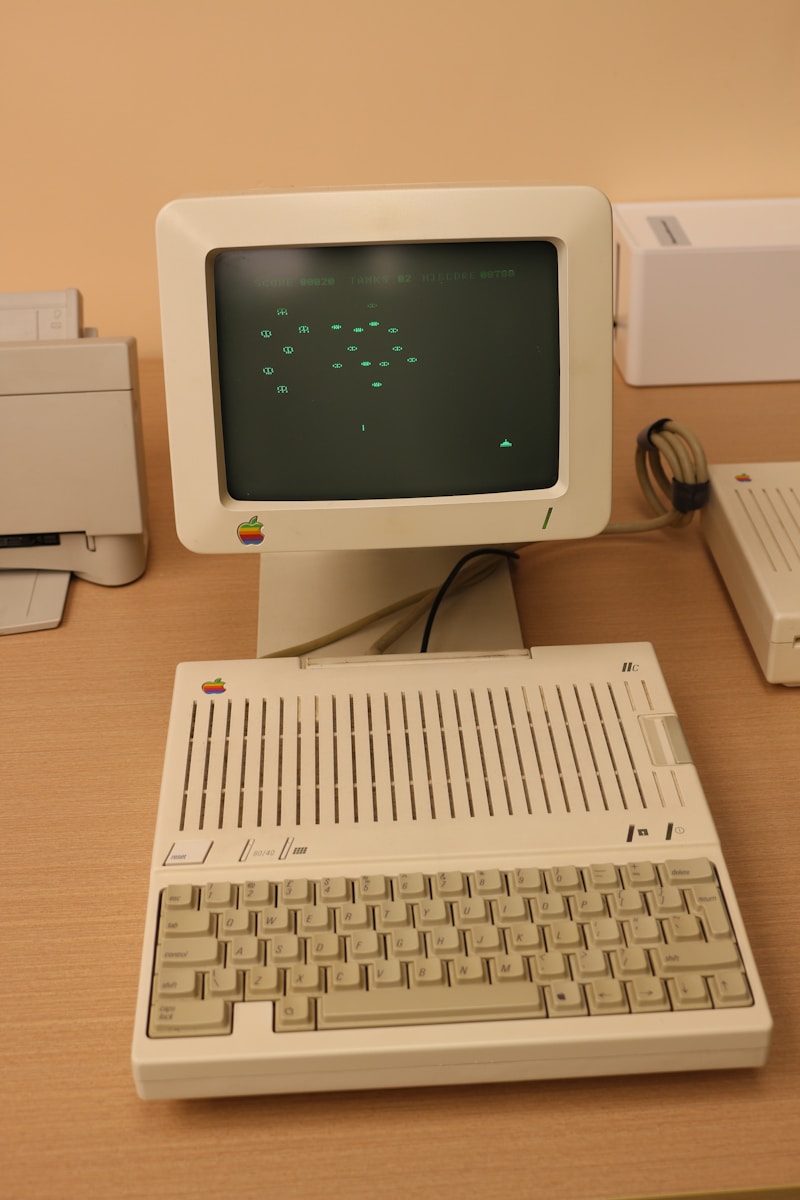
An old computer sitting on top of a wooden desk

Desktop computers have profoundly evolved over the decades, shifting from large, room-filling machines to sleek, powerful devices. This article delves into their history, major technological advancements, and how these changes have shaped modern computing, highlighting the journey from early models to today’s innovative designs.

Historical Development and Key Milestones

In tracing the **historical development of desktop computers**, it is essential to recognize the foundational experiments and prototypes that set the stage for the personal computing revolution. During the 1970s, computing technology was predominantly confined to large, expensive mainframes and minicomputers used by corporations and institutions. However, innovations were gradually emerging, beginning with early programmable machines that hinted at the possibilities of personal, accessible computing. The Datapoint 2200, introduced in 1970, is often considered a pioneer. This machine was a programmable terminal with a built-in keyboard, capable of executing simple programs via a built-in language. Though not a personal computer in the modern sense, it demonstrated how computing could be embedded into a compact, user-friendly machine. Similarly, Hewlett-Packard’s HP 9800 Series, launched in 1970, offered a programmable calculator/desktop computer hybrid, blending calculator-like size with programming capabilities and inspiring future miniaturization efforts.

The IBM 5100, released in 1975, marks a significant milestone as one of the first portable, all-in-one desktop computers. It housed a microprocessor and was capable of running various programs, including the APL and BASIC languages, which made it versatile for business and scientific use. Its compact design and integrated display ports allowed it to be transported more easily than the massive mainframes of the time, laying the groundwork for the concept of personal computers.

The breakthrough came in 1977 with the launch of what are recognized as the first wave of truly personal computers. The Apple II, developed by Steve Wozniak and Steve Jobs, was among the earliest mass-produced personal computers, featuring a color display, a keyboard, and expansion slots for peripherals. Its open architecture encouraged third-party development, which rapidly expanded its functionality and appeal. The TRS-80, introduced by Tandy Corporation (Radio Shack), and the Commodore PET followed suit, each offering affordable, ready-to-use computing solutions targeted at hobbyists, educators, and small businesses. These early personal computers were pivotal because they transitioned computing from large, centralized systems to accessible, desktop-sized devices with emphasis on user-friendliness and expandability.

The 1980s saw an explosion of innovation and competition, fundamentally transforming desktop computing. IBM’s IBM PC 5150, launched in 1981, dramatically shifted the landscape. Its open architecture and use of off-the-shelf components set a standard that industry would adopt widely. The IBM PC’s inclusion of MS-DOS as the operating system became a de facto industry standard and a catalyst for software development. Hardware advancements during this period included the transition from simple 8-bit processors to more powerful 16-bit architectures such as the Intel 80286 and 80386, enabling more complex applications and multitasking capabilities.

Throughout the 1980s and early 1990s, desktop computers grew increasingly sophisticated, evolving in hardware and form factor. Desktops transitioned from bulky, monolithic boxes to more refined, space-efficient designs. Advances in semiconductor technology, particularly the shift from P5 to P6 processors by Intel, facilitated higher clock speeds, increased RAM capacity, and better graphics capabilities. The introduction of graphical user interfaces (GUIs) with systems like the Apple Macintosh in 1984 and Microsoft Windows in the late 1980s revolutionized user interaction, making computers more accessible to a broader audience. These developments drove innovation across hardware components such as hard drives, which moved from kilobytes to megabytes, and input devices, including the mouse, which became standard peripherals.

At the same time, form factor shifts occurred alongside hardware improvements. Desktops became more compact and modular, accommodating the increasing demand for performance and expandability but also laying the groundwork for more aesthetic, space-efficient designs. AT and ATX form factors emerged, standardizing components and making upgrades easier. The introduction of dedicated graphics cards, sound cards, and additional RAM slots fueled the era’s powerful, multimedia-capable machines. This hardware evolution enabled desktop computers to handle increasingly complex tasks, from desktop publishing to early 3D modeling, fueling the extension of their roles from mere productivity tools to multimedia centers.

By the 1990s, desktop computers had firmly established themselves as essential tools in homes and workplaces, driven by the democratization of technology and prices that kept dropping. The rise of the Internet also began to influence hardware design, with integrated modems and network interface cards becoming common. The transition from bulky, expensive machines to sleek, user-friendly desktops with high-performance components marked an era of rapid technological progress that would continue into the new millennium. Overall, this period of rapid hardware innovation, combined with the evolution of software and user interface design, fundamentally redefined what desktop computers could do and who could use them, thus shaping the computing landscape for decades to come.

Conclusions

In summary, desktop computers have experienced remarkable transformation marked by miniaturization, increased power, and versatile designs. Their evolution reflects broader technological progress and changing user needs, cementing their role in everyday life. Understanding this history offers insight into future innovations and ongoing advancements in personal computing.