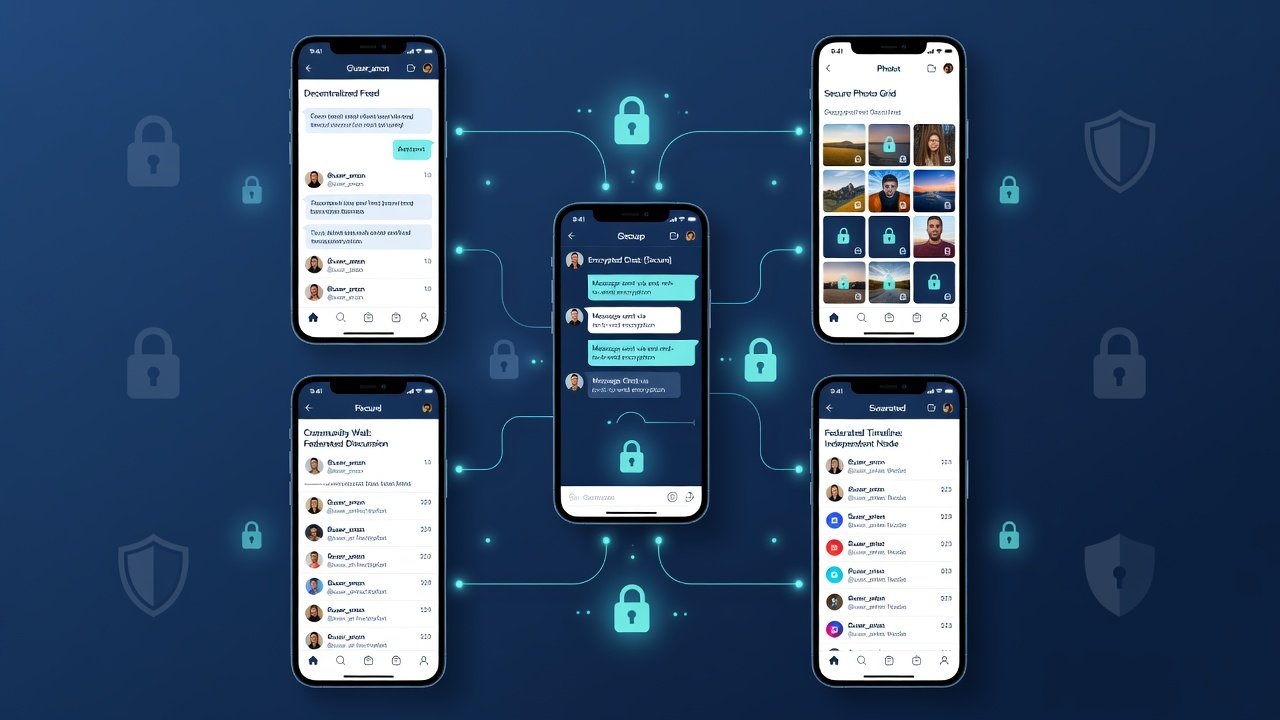
Five of the Safest Social Media Apps for Privacy-Conscious Users
In an era where data breaches and privacy scandals dominate headlines, finding the safest social media apps has become essential. Traditional platforms often harvest user data for targeted advertising, leaving personal information vulnerable. Fortunately, several privacy-first alternatives prioritize end-to-end encryption, decentralized networks, and minimal data collection. This guide explores five of the most secure social media platforms, helping you connect with others without compromising your digital safety.
Why Choose Secure Social Media Platforms?
Most mainstream apps track your activity, sell data to third parties, and store information on centralized servers. The safest social media apps counter these risks by using open-source code, user-controlled servers, and strong encryption. Switching to these platforms reduces exposure to hackers and surveillance while maintaining meaningful social connections.
1. Mastodon
Mastodon stands out as a leading decentralized social network. Built on the ActivityPub protocol, it operates through independently run servers called “instances,” giving users control over their data. Unlike corporate platforms, Mastodon does not use algorithms to manipulate feeds or sell personal information.
- Key safety features: End-to-end encryption for direct messages, open-source codebase, and no advertising.
- Best for: Microblogging similar to Twitter, with robust community moderation tools.
Users can choose instances focused on specific interests or privacy levels, making Mastodon one of the top safest social media apps for those seeking freedom from big tech oversight.
2. Diaspora*
Diaspora* offers a fully decentralized alternative to Facebook. Its peer-to-peer architecture means your data lives on pods (servers) you or trusted communities control. This design prevents any single entity from accessing all user information.
- Key safety features: Strong encryption options, aspects-based sharing for granular privacy control, and no data monetization.
- Best for: Sharing photos, updates, and discussions in a truly user-owned environment.
Because it is open-source and community-driven, Diaspora* ranks among the most secure social networks available today.
3. Pixelfed
Pixelfed serves as a privacy-respecting Instagram alternative. It emphasizes chronological feeds and does not employ tracking pixels or aggressive data collection. Like Mastodon, it runs on the federated ActivityPub network.
- Key safety features: No ads, open-source code, and user-controlled visibility settings for posts and profiles.
- Best for: Photo sharing without the surveillance common on mainstream visual platforms.
Pixelfed’s commitment to ethical design makes it an excellent choice for photographers and visual storytellers prioritizing security.
4. MeWe
MeWe markets itself as “the anti-Facebook,” promising never to sell user data or display ads. It combines familiar social features with strong privacy protections, including encrypted messaging and disappearing content options.
- Key safety features: End-to-end encryption, no facial recognition, and customizable privacy settings.
- Best for: Users wanting a mainstream-like experience with significantly better data protection.
While not fully decentralized, MeWe’s transparent policies place it high on lists of the safest social media apps.
5. Element (powered by Matrix)
Element provides secure group messaging and community spaces through the Matrix protocol. It supports end-to-end encrypted rooms, decentralized servers, and even voice and video calls with the same protections.
- Key safety features: Open-source encryption, self-hosted server options, and cross-platform compatibility.
- Best for: Private communities, activist groups, and teams needing secure collaboration.
Element’s decentralized nature ensures no central authority can access your conversations, reinforcing its status as one of the most secure social platforms.
Final Tips for Staying Safe Online
Even when using the safest social media apps, practice good habits: enable two-factor authentication, review privacy settings regularly, and avoid sharing sensitive personal details. Consider combining these platforms with a reputable VPN for an extra layer of protection. By choosing privacy-focused networks like Mastodon, Diaspora*, Pixelfed, MeWe, and Element, you can enjoy social connections while keeping your data truly yours.
Transitioning to secure alternatives may require a short adjustment period, but the long-term benefits for your digital privacy are well worth the effort. Start exploring these platforms today to reclaim control over your online presence.